
Pharma Bio-Data & Quantum Storage 2026
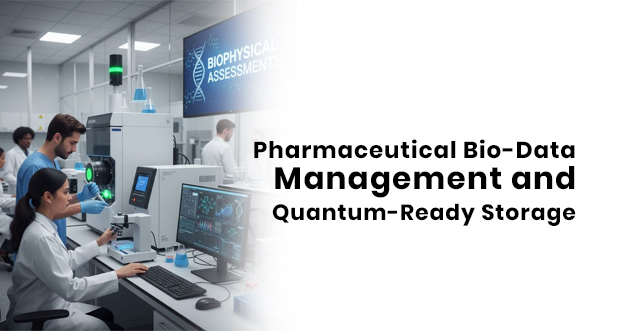
Pharma Bio-Data & Quantum Storage 2026
Published by AgamiSoft | Reading time: ~14 minutes
|
TLDR ; Bio data management for pharmaceutical organizations requires platforms that ingest, store, govern, and analyze structured and unstructured research data genomics, clinical trial records, assay results, imaging studies at volumes that have grown beyond what traditional data warehouse architectures can handle. Organizations that modernize their bio-data platforms now achieve faster AI-driven drug discovery pipelines and build the quantum-ready storage foundation that will protect long-lived, high-value research data from the cryptographic threats quantum computing will make viable within the decade. The investment case is both immediate and structural: better data infrastructure produces faster research outcomes today and protects the IP value of that research indefinitely. |
Why Pharmaceutical Bio-Data Management Has Become a Strategic Technology Decision in 2026
Pharmaceutical data volume has scaled faster than the infrastructure managing it. A single next-generation sequencing (NGS) run generates 30–100GB of raw genomic data. A large-scale clinical trial generates terabytes of structured and unstructured records spanning electronic health records, imaging files, lab results, patient-reported outcomes, and regulatory submissions. A drug discovery program combining computational chemistry, genomics, and AI-driven molecular modeling generates petabyte-scale research datasets that 2010-era pharma data warehouse architectures were never designed to support.
The competitive stakes of infrastructure quality have increased commensurately. AI-driven drug discovery using machine learning to identify drug candidates, predict clinical outcomes, and optimize trial design is only as fast as the data pipelines feeding those models. Pharmaceutical organizations with well-governed, cleanly structured, AI-accessible bio-data management platforms run drug discovery pipelines in months that competitors running on fragmented, poorly governed data architectures take years to complete. Insilico Medicine's AI-designed drug candidate entered clinical trials in approximately 18 months from target identification in 2023 a timeline that would have taken 4–6 years through traditional approaches, made possible by data infrastructure that could feed AI models at the required scale and quality.
Three developments make 2026 the year pharmaceutical CIOs and research leaders must address bio-data management infrastructure as a strategic priority:
AI drug discovery is now mainstream, not experimental. Every major pharmaceutical organization is running AI-augmented drug discovery programs, and the ones achieving the fastest pipeline velocity are those whose data infrastructure supports the data quality, access speed, and governance that AI training and inference require. Poor bio-data management infrastructure is now a measurable competitive disadvantage, not a theoretical limitation.
Quantum computing's threat to research data security is no longer distant. While fault-tolerant quantum computers capable of breaking current RSA and elliptic-curve cryptography remain years away from broad deployment, the "harvest now, decrypt later" threat is present today adversaries collecting encrypted pharmaceutical research data now, with the intention of decrypting it when quantum capability arrives. Pharmaceutical IP with 20-year patent lifespans and regulatory data retained for decades is exactly the category of long-lived data that "harvest now, decrypt later" attacks specifically target.
Regulatory data governance requirements have expanded significantly. FDA's data integrity guidance, EMA regulatory requirements for electronic trial master files, ICH E6(R3) GCP revisions, and HIPAA continue evolving toward stricter requirements for data traceability, access logging, and retention governance requirements that modern bio-data management platforms satisfy natively, and that legacy systems retrofitting compliance onto inadequate infrastructure satisfy poorly.
What Is Pharmaceutical Bio-Data Management, Exactly and What Does a Complete Platform Cover?
Bio data management in the pharmaceutical context is the complete lifecycle management of biological and clinical research data ingestion from laboratory instruments, imaging systems, and clinical platforms; storage in scalable, governed infrastructure; governance ensuring data quality, traceability, and regulatory compliance; integration for cross-study analysis and AI model training; and security protecting high-value research IP across the full data lifecycle.
It is not a single tool. It is an architecture spanning five functional layers, each serving a distinct research and compliance requirement:
Layer 1 Data ingestion and integration
Automated collection of research data from heterogeneous sources: NGS sequencers, mass spectrometers, electronic lab notebooks (ELNs), clinical data management systems (CDMS), electronic health records, imaging systems (MRI, PET, digital pathology), and third-party research partners and CROs. The challenge at this layer is not just volume it is the heterogeneity of formats (FASTQ, DICOM, HL7 FHIR, SAS datasets, PDF regulatory documents) that requires format-aware ingestion pipelines rather than generic data lake ingestion.
Layer 2 Scalable storage architecture
A tiered storage model matching data access frequency to storage economics: hot storage for active research data requiring frequent access (current trial data, active computational chemistry projects), warm storage for data under active analysis but not daily access (completed cohort data, historical trial records in analysis phase), and cold storage for long-term retention of regulatory submissions, completed trial master files, and raw genomic data that regulatory frameworks require retaining for decades.
Layer 3 Data governance and quality management
FAIR data principles Findable, Accessible, Interoperable, Reusable provide the foundational governance framework for pharmaceutical research data. Applied in practice, FAIR governance means every dataset is discoverable through a governed catalog with standardized metadata, accessible to authorized researchers through controlled mechanisms, interoperable with other datasets through standard vocabularies and ontologies (Human Phenotype Ontology, ChEMBL compound identifiers, SNOMED CT clinical terminology), and sufficiently documented to support reuse in future research without the original research team's involvement.
Layer 4 Analytical and AI-access infrastructure
The connection between stored research data and the computational environments where analysis and AI model training occur compute-storage co-location in cloud environments to eliminate data transfer bottlenecks, API-accessible data layers that AI and bioinformatics pipelines can query programmatically, and feature stores that pre-compute commonly needed data transformations so research teams aren't reprocessing the same raw data repeatedly.
Layer 5 Security and compliance
Encryption at rest and in transit, access controls enforcing least-privilege data access mapped to research authorization, comprehensive audit logging satisfying FDA 21 CFR Part 11 and GCP data integrity requirements, and critically for 2026 a roadmap toward quantum-resistant cryptography for the data categories with the longest retention and highest IP value requirements.
Research Data Management (RDM) the systematic governance of research data through its full lifecycle is the operational discipline that runs across all five layers, providing the policies, standards, and processes that make the technical infrastructure produce trustworthy, compliant, reusable research data rather than just well-stored data of uncertain provenance and quality.
The Data Scale and Business Impact Numbers Behind Pharmaceutical Bio-Data Investment
Pharmaceutical Research Data Volume and Growth
|
Data Category |
Typical Volume per Study or Run |
Growth Trend |
Storage Characteristic |
|
Whole genome sequencing (30x depth) |
90–100GB per sample |
~30% annual volume growth |
High retention, infrequent re-access after initial analysis |
|
Clinical trial EDC + eTMF |
1–50TB per trial |
Growing with decentralized trial adoption |
Long retention (15–25 years regulatory minimum) |
|
Digital pathology imaging |
1–10GB per slide, 1,000+ slides per study |
Rapid growth with AI pathology adoption |
Intensive compute-co-located access during analysis |
|
Mass spectrometry proteomics |
10–100GB per experiment |
Growing with multi-omics platform adoption |
Frequent re-analysis across studies |
|
AI drug discovery molecular datasets |
100GB–10TB per program |
Fastest-growing category |
Frequent read access for model training |
Sources: Global Genomics Data Initiative 2025; Pistoia Alliance Research Data Management Survey 2025; Gartner Life Sciences Technology Report 2025.
Business Impact of Data Infrastructure Quality
-
Pharmaceutical organizations with mature, FAIR-compliant research data management platforms complete AI drug discovery pipeline validation 35–50% faster than organizations with fragmented, poorly governed data (Pistoia Alliance, 2025)
-
Data quality issues missing metadata, inconsistent terminology, non-reusable formats are responsible for 30–40% of avoidable rework in computational drug discovery programs, according to research team surveys (Pistoia Alliance, 2025)
-
The average cost of a clinical trial data integrity finding resulting in FDA data integrity query: $500,000–$3,000,000 in remediation, delayed regulatory submission, and potential re-study costs costs that well-implemented data governance with automated audit trails consistently avoids (FDA enforcement data, 2025)
The Quantum Threat to Long-Lived Pharmaceutical Data
-
NIST finalized its first post-quantum cryptography standards in 2024 (CRYSTALS-Kyber for key encapsulation, CRYSTALS-Dilithium for digital signatures), beginning the migration timeline that organizations with long-lived sensitive data must plan against now
-
"Harvest now, decrypt later" attacks against pharmaceutical research data are documented the high IP value and long patent lifespans of pharmaceutical research make it among the most attractive targets for state-level adversaries collecting encrypted data today for future quantum decryption
-
Pharmaceutical regulatory bodies retain clinical trial data submission requirements of 15–25 years minimum, meaning data encrypted today with RSA-2048 may still be in retention when quantum decryption capability becomes available the retention timeline itself creates the quantum risk exposure, regardless of when quantum computing matures
How to Build a Modern Pharmaceutical Bio-Data Management Platform: A 6-Step Framework
Step 1: Conduct a Research Data Audit Mapping Data Volume, Format, Access Patterns, and Retention Requirements
Before any platform architecture decisions, audit your current research data landscape across four dimensions:
-
Volume and growth rate by data category what you store now and what you will store in 3–5 years under current research program growth trajectories
-
Format heterogeneity which data formats your instruments, systems, and partners generate, and which of those formats lack standard parsers in your current infrastructure
-
Access patterns which datasets are accessed frequently (active trial data, current computational chemistry projects) versus rarely (completed trial master files, historical genomics from prior programs) the foundation for tiered storage architecture design
-
Retention requirements regulatory minimum retention periods by data category, cross-referenced against the quantum threat horizon for data categories with the longest retention requirements
This audit produces the data architecture requirements that determine platform selection organizations that skip it frequently build infrastructure optimized for today's data volume and format mix while missing the growth trajectory that will make that infrastructure inadequate within 18 months.
Step 2: Architect a Multi-Tier Storage Model Aligned to Access Frequency and Retention Requirements
Design a tiered storage model mapping each data category to the appropriate storage tier:
-
Hot tier (NVMe/SSD cloud storage): active computational chemistry datasets, current trial EDC data under active CRO submission, digital pathology images in active AI analysis requiring sub-second read latency and frequent parallel access
-
Warm tier (standard cloud object storage S3 Standard, Azure Blob Hot): completed but recently active study data, molecular screening results from programs in the past 12–18 months, regulatory submission packages in active review
-
Cold tier (archive cloud storage S3 Glacier, Azure Archive): completed trial master files beyond active regulatory review, raw genomics data from completed programs, legacy research data retained for regulatory compliance
-
Compliant long-term archive: data retained for regulatory minimums (15–25 years) in storage specifically meeting FDA 21 CFR Part 11 and GCP requirements for long-term record integrity this tier requires quantum-resistant encryption as part of its security architecture given retention timelines that overlap the quantum threat horizon
Step 3: Implement FAIR Data Governance From Ingestion, Not as a Retroactive Cataloging Exercise
FAIR data governance applied retroactively cataloging and annotating data that was stored without governance standards is dramatically more expensive and less complete than FAIR principles applied at ingestion:
-
Define standardized metadata schemas for each data category at ingestion time requiring instruments, ELNs, and CDMS exports to populate defined metadata fields before data is accepted into the research data platform
-
Adopt standard biomedical ontologies for terminology SNOMED CT for clinical data, ChEMBL identifiers for compounds, Human Phenotype Ontology for phenotypic data so datasets using different source vocabularies can be cross-queried through a common semantic layer
-
Implement an electronic lab notebook (ELN) integration that captures experimental context and links raw instrument data to the experimental conditions that generated it at the time of capture, not reconstructed from memory months later
-
Deploy a data catalog (Collibra, Alation, or cloud-native equivalents) that continuously crawls the research data platform and automatically registers new datasets with their available metadata, providing researchers with a governed, searchable research data inventory
Step 4: Design AI-Ready Data Access Infrastructure Before AI Programs Begin
The data access architecture that supports AI drug discovery workloads must be designed before those workloads are deployed, not retrofitted onto existing storage infrastructure that was not designed for the access patterns AI training requires:
-
Compute-storage co-location: place training data in the same cloud region as GPU compute instances data transfer costs and latency between regions are significant performance bottlenecks for large-scale genomics model training
-
Columnar and vector-optimized formats: store molecular and genomics data in formats optimized for the analytical and ML access patterns those data types require (Parquet for tabular omics data, specialized genomics formats like CRAM for aligned sequence data, vector embeddings for similarity search in compound discovery)
-
Research data feature store: pre-compute commonly needed transformations (normalized gene expression matrices, molecular fingerprints, clinical endpoint derivations) and serve them through a feature store so research teams and ML pipelines can access analysis-ready data without reprocessing raw data repeatedly
-
Federated data access for multi-site studies: design data access infrastructure for decentralized clinical trials and multi-site research programs so analysis can be performed against distributed data without requiring centralized raw data movement that creates compliance and data transfer challenges
Step 5: Implement Post-Quantum Cryptography for Long-Retention Data Categories
Migrate long-retention, high-value research data categories to NIST-standardized post-quantum cryptography as part of your current infrastructure modernization:
-
Identify which data categories have retention requirements extending 10+ years regulatory trial master files, raw genomics data, novel compound characterization data these are the categories where "harvest now, decrypt later" attacks represent genuine IP risk
-
Implement CRYSTALS-Kyber for key encapsulation and CRYSTALS-Dilithium for digital signatures on these long-retention data categories the NIST-standardized algorithms finalized in 2024 that are quantum-resistant
-
Maintain crypto-agility design your encryption architecture so algorithm selection is a configuration parameter rather than a hardcoded implementation, enabling future algorithm transitions without re-architecting the storage layer
-
Engage your cloud providers on their post-quantum migration roadmap AWS, Azure, and Google Cloud all have published post-quantum cryptography integration timelines, and aligning your organizational migration to provider roadmaps reduces implementation complexity
Step 6: Build Regulatory Compliance Into the Data Platform Architecture
FDA 21 CFR Part 11, GCP data integrity requirements, and the electronic trial master file (eTMF) standards applicable to clinical trial data are not compliance checkboxes applied after the fact they require specific technical capabilities that must be designed into the data platform architecture:
-
Complete audit trail: every data creation, modification, and deletion event logged with timestamp, user identity, and the previous value not just change detection but full audit history satisfying "who changed what, when, and what did it say before" at the record level
-
Electronic signature controls: electronic signatures on regulated records (protocol amendments, GCP-required sign-offs, raw data acceptance) meeting 21 CFR Part 11 requirements for signature meaning, record linkage, and audit trail
-
System validation documentation: formal validation of regulated data systems (IQ/OQ/PQ protocols, risk assessments, change control records) the documentation framework regulators expect to review during inspections
-
Access control with role-appropriate restrictions: data access limited to individuals with appropriate research authorization, with access logs satisfying regulator review requirements and user access reviews conducted on a defined schedule
Which Platforms and Tools Deliver Best Results for Pharmaceutical Bio-Data Management in 2026?
For cloud-native research data platforms:
Amazon Web Services (AWS) for Life Sciences and Microsoft Azure for Healthcare and Life Sciences both provide HIPAA-compliant, FDA 21 CFR Part 11-capable research data infrastructure with purpose-built services for genomics (AWS Omics, Azure Genomics), clinical trial data management, and AI/ML research pipeline support. The choice between them is largely determined by existing organizational cloud commitments and which ecosystem (AWS SageMaker vs Azure Machine Learning) better supports the AI drug discovery tools in use.
For research data governance and catalogs:
Collibra and Alation provide enterprise data catalogs with life sciences-specific metadata frameworks supporting FAIR data governance at scale. Atlan is gaining traction in biotech for its more accessible governance UX for research teams without dedicated data engineering support.
For clinical trial data management:
Medidata Rave remains the enterprise standard for clinical EDC with built-in 21 CFR Part 11 compliance and strong regulatory submission package generation. Veeva Vault eTMF is the leading electronic trial master file system, with integrated document management meeting ICH E6(R3) requirements.
For genomics and multi-omics data management:
DNAnexus provides a cloud-based genomics data platform specifically designed for large-scale genomic research data management, with built-in security frameworks meeting pharmaceutical compliance requirements. Seven Bridges Genomics Platform provides comparable capability with strong workflow automation for bioinformatics pipelines.
For electronic lab notebook (ELN) integration:
Benchling has become the life sciences ELN standard for biotech and emerging pharmaceutical organizations, providing structured data capture integrated with research data platforms. LabArchives and IDBS provide comparable ELN capability for organizations with different size and integration requirements.
For post-quantum cryptography implementation:
AWS Key Management Service has begun integrating NIST post-quantum algorithm support, with broader availability continuing through 2026. Fortanix and Thales provide hardware security module (HSM) and key management infrastructure with post-quantum algorithm support for organizations requiring on-premises or hybrid key management.
Explore our Data Engineering Services and Healthcare & Biotech Solutions capabilities for pharmaceutical organizations designing bio-data management platforms that combine research performance, regulatory compliance, and quantum-ready security.
What Goes Wrong With Pharmaceutical Bio-Data Management Programs and How to Prevent Each Failure
Failure 1: Building a Data Lake Without Governance, Producing a Data Swamp
Pharmaceutical organizations that deploy cloud data lake infrastructure without implementing FAIR governance metadata standards, catalog registration, data quality validation at ingestion consistently produce environments where data exists but is not effectively findable or reusable. Research teams build local copies of datasets because the central lake's data cannot be trusted or found. Data engineers spend most of their time answering "where is the [dataset] from [study]" questions rather than building analysis pipelines. The cost of retrofitting governance onto an ungoverned data swamp is substantially higher than implementing governance at initial deployment and the research velocity penalty while the swamp state persists is a direct competitive disadvantage.
Failure 2: Treating Quantum-Ready Storage as a Future Problem
Organizations that defer post-quantum cryptography migration because quantum computers capable of breaking RSA-2048 don't exist yet are misunderstanding the threat timeline for their specific data category. The relevant question is not "when will quantum computers exist" but "when will the data I'm encrypting today no longer be under regulatory retention requirements" for clinical trial data with 15–25 year retention requirements, the answer is well within the plausible quantum computing timeline. The migration to NIST post-quantum standards should be driven by data retention requirements, not by the current state of quantum hardware.
Failure 3: Separating Clinical and Research Data Into Permanently Siloed Architectures
Pharmaceutical organizations that manage clinical trial data and research/discovery data in permanently separate, non-interoperable platforms consistently miss the analytical opportunities that arise when clinical outcomes can be linked to genomic, biomarker, and experimental data from discovery programs. The FDA's Real-World Data and Real-World Evidence framework increasingly enables clinical-research data integration as an analytical asset organizations with integrated platforms leverage this; those with permanently siloed architectures cannot.
Failure 4: Underinvesting in Compute-Storage Co-Location for AI Workloads
Pharmaceutical organizations that store genomics and molecular research data in one cloud region and run AI training workloads in another because storage was provisioned before AI use cases were defined pay significant data transfer costs and experience training bottlenecks that reduce the economic viability of AI drug discovery programs. Cloud data transfer costs at petabyte scale are material, and training pipeline latency from cross-region data access can extend training cycles by 20–40% compared to same-region compute-storage architectures. Co-location decisions are difficult to reverse once data is stored the architecture must be right before petabyte-scale data accumulates in the wrong location.
Frequently Asked Questions
What Is Pharmaceutical Bio-Data Management?
Pharmaceutical bio-data management is the complete lifecycle governance of biological and clinical research data from automated ingestion of instrument outputs (genomic sequencers, mass spectrometers, imaging systems), through scalable cloud storage in governed, FAIR-compliant data infrastructure, to integration with AI research pipelines and regulatory submission systems. It spans structured data (clinical trial records, assay results, compound screening data) and unstructured data (digital pathology images, clinical documents, raw sequence files), applying data quality standards, access controls, and audit trails that satisfy both research utility requirements and regulatory compliance obligations under FDA 21 CFR Part 11, GCP, and applicable data protection frameworks.
Why Is Quantum-Ready Storage Important for Pharmaceutical Data?
Quantum-ready storage is important because pharmaceutical research data carries the longest retention requirements and highest IP value of any commercial data category clinical trial data must be retained for 15–25 years under regulatory requirements, and novel compound characterization data retains commercial value across patent lifespans of 20 years. Current RSA and elliptic-curve cryptography protecting that data may become decryptable by quantum computers within that retention window, and "harvest now, decrypt later" attacks are already collecting encrypted pharmaceutical data today in anticipation of that capability. NIST finalized its first post-quantum cryptography standards (CRYSTALS-Kyber and CRYSTALS-Dilithium) in 2024, providing the migration target that pharmaceutical organizations should begin implementing on their long-retention, high-IP-value data categories now, prioritized by how long the data must be retained.
How Can Pharmaceutical Organizations Secure Research Data?
Pharmaceutical research data security requires controls across four layers. First, access control role-based data access limiting researcher access to the specific studies and datasets their authorization covers, with comprehensive audit logging of all access events satisfying regulatory data integrity requirements. Second, encryption AES-256 at rest and TLS 1.3 in transit for current data, with migration toward NIST post-quantum cryptography (CRYSTALS-Kyber) for data categories with long regulatory retention requirements. Third, data governance FAIR-compliant data management ensuring data provenance, metadata completeness, and access audit trails that support both internal integrity and regulatory inspection readiness. Fourth, supply chain and third-party security controls governing how CRO partners, technology vendors, and research collaborators access pharmaceutical research data, including data processing agreements, access logging, and security assessment requirements matching the data sensitivity of what third parties can reach.
Govern Data at Ingestion. Co-Locate Compute and Storage Before AI Workloads Begin. Migrate to Post-Quantum Before Retention Windows Make It Urgent.
Pharmaceutical bio-data management at the scale, speed, and compliance level that 2026 drug discovery requires is not a storage infrastructure decision it is a research strategy decision. The data platform architecture determines which AI drug discovery programs are feasible on your specific infrastructure, how quickly regulatory submissions can be compiled from governed audit trails, and whether the research IP generating that data remains protected across the full span of its commercial and regulatory value.
The pharmaceutical organizations achieving the fastest drug discovery pipeline velocity and the cleanest regulatory submissions in 2026 made the same foundational decisions: they implemented FAIR governance at ingestion rather than retrofitting it onto an existing data swamp, they co-located compute and storage in the same cloud region before their AI programs scaled to petabyte data volumes, and they began post-quantum cryptography migration on long-retention data categories before the retention timeline math made delay indefensible.
Conduct your research data audit this quarter mapping volume, format, access pattern, and retention requirements across every data category in your research and clinical portfolio. Design your tiered storage architecture against that audit before provisioning further storage infrastructure. Implement FAIR metadata standards at the next ELN, CDMS, or instrument integration project, so governance accumulates forward rather than requiring retroactive remediation. Initiate your post-quantum cryptography migration assessment now identifying which data categories have retention requirements that create quantum risk exposure and which NIST algorithms your cloud providers support today.
To design a bio-data management platform that integrates research performance, regulatory compliance, AI accessibility, and quantum-ready security into a unified architecture, explore our Data Engineering Services and Healthcare & Biotech Solutions capabilities structured for pharmaceutical CIOs and research leaders who need data infrastructure that matches the pace of modern drug discovery.

United States
Salesforce Tower, 415 Mission Street,
San Francisco, CA 94105
Canada
206-15268 100 Avenue,Surrey,
British Columbia, V3R 7V1, Canada
Bangladesh
Sharif Complex (11th floor),
31/1 Purana Paltan, Dhaka - 1000