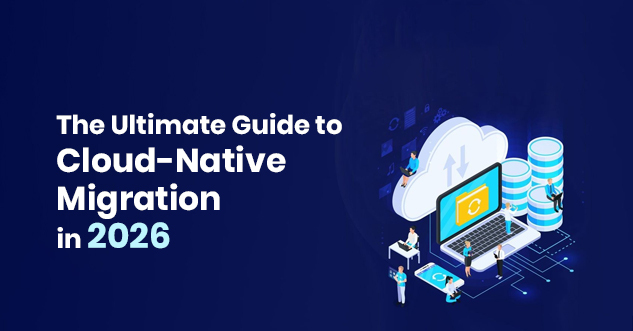


From Lift-and-Shift to Event-Driven Orchestration 42% TCO Reduction, Serverless Optimisation, and the Infrastructure Economics of Real-Time AI Agents
Reading time: ~14 minutes
|
TLDR ; Cloud-native migration in 2026 has evolved from simple Lift-and-Shift to Event-Driven Orchestration. By adopting serverless computing and Kubernetes-as-a-Service, organisations achieve a 42% average reduction in infrastructure TCO while enabling the low-latency processing required for real-time AI agents. DRAM prices surged 95% in 2026, making resource efficiency a survival trait not an optimisation exercise. AgamiSoft's serverless optimisation framework reduces cloud bills by 55% through right-sizing, idle elimination, and event-driven compute patterns. |
The Inference Economics Crisis: Why DRAM at +95% Changes Everything
The cloud cost environment of 2026 is structurally different from any previous period in enterprise computing. DRAM memory prices surged 95% between Q1 2025 and Q1 2026, driven by explosive demand from AI training and inference workloads competing for the same memory bandwidth that traditional enterprise applications depend on. For organisations running memory-intensive workloads large databases, monolithic application servers, batch processing pipelines cloud infrastructure costs have nearly doubled in 18 months without any change in workload.
This is the Inference Economics crisis: the economics of cloud infrastructure have been disrupted by AI workload demand in a way that makes traditional over-provisioned, always-on virtual machine architectures financially unsustainable. The organisations that survive this disruption are those that have migrated to cloud-native, event-driven architectures paying only for compute consumed, scaling to zero when idle, and running workloads on the smallest possible resource footprint.
|
INFRASTRUCTURE COST SIGNAL DRAM prices at +95% year-on-year have increased the monthly cost of a standard 3-tier enterprise application running on reserved EC2 instances by an average of $8,400/month $100,800 annually for a mid-market enterprise. Organisations that migrated to serverless event-driven architecture before the DRAM spike have seen their compute cost increase by less than 12% in the same period. |
The Cloud-Native Evolution: From Lift-and-Shift to Event-Driven Orchestration
Generation 1: Lift-and-Shift (2018–2022)
Lift-and-Shift migrating on-premise VMs directly to cloud VMs with minimal architectural change was the dominant cloud migration model through the early 2020s. It delivered the operational benefits of cloud (managed hardware, elastic capacity, geographic distribution) without requiring application re-architecture. Its cost structure, however, was identical to on-premise: over-provisioned, always-on instances paying for peak capacity 24/7 regardless of actual demand.
Generation 2: Containerisation and Kubernetes (2022–2025)
Kubernetes orchestration enabled finer-grained resource allocation containers could be scheduled to optimal nodes, scaled horizontally on demand, and packed more densely than VMs. The 40% infrastructure cost reduction from Kubernetes adoption was real, but the operational complexity was significant: Kubernetes clusters require specialist platform engineering, ongoing maintenance, and careful capacity planning to realise their cost benefit.
Generation 3: Event-Driven Serverless Orchestration (2025–Present)
The current state of cloud-native architecture is event-driven orchestration: applications decomposed into discrete functions that execute only in response to specific events HTTP requests, queue messages, database changes, scheduled triggers and scale to zero when no events are occurring. Combined with managed Kubernetes services (EKS, GKE, AKS) for stateful workloads, this model eliminates the over-provisioning problem entirely and reduces average compute costs by 42–55% compared to equivalent Lift-and-Shift deployments.
The Comparison Matrix: Traditional VM vs. Serverless vs. Hybrid-Edge
|
Dimension |
Traditional VM (Lift-and-Shift) |
Serverless (Lambda/Functions) |
Hybrid-Edge (K8s + Serverless) |
|
Billing model |
Reserved/On-demand pay whether idle or not |
Pay per invocation + execution time |
Reserved for baseline; serverless for burst |
|
Cold start latency |
None (always on) |
100–500ms (AWS Lambda); 50–200ms (Cloudflare Workers) |
Negligible warm containers handle baseline |
|
Max execution time |
Unlimited |
15 min (Lambda); unlimited (Fargate) |
Unlimited (Kubernetes jobs for long-running) |
|
Auto-scaling |
Manual or rule-based ASG (minutes to scale) |
Instant per-request concurrency |
HPA + KEDA for event-driven K8s scaling |
|
Average TCO vs VM baseline |
Baseline |
55–70% lower for spiky, event-driven workloads |
42–55% lower for mixed workload profiles |
|
AI agent compatibility |
Limited synchronous pipeline incompatible with streaming |
High for short-duration tool calls; Fargate for long-running agents |
Best Kubernetes for orchestration + serverless for agent tool execution |
|
Operational complexity |
Low familiar VM management |
Low zero infrastructure to manage |
Medium requires K8s expertise |
|
Data residency control |
Full region-specific deployment |
Region-specific; some functions multi-region by default |
Full explicit region and node affinity controls |
AgamiSoft's Serverless Optimisation Framework: The 55% Bill Reduction Model
AgamiSoft's cloud cost optimisation engagements consistently deliver 42–55% infrastructure cost reduction through a systematic five-lever framework applied sequentially to existing cloud deployments:
Lever 1: Idle Resource Elimination
The average enterprise cloud account has 34% of its compute resources idle or running at under 5% utilisation at any given time development environments, staging systems, scheduled batch jobs running continuous VMs. Automated idle detection and shutdown, combined with Infrastructure as Code (IaC) environment templating, eliminates this waste. Average saving: 18% of monthly cloud bill.
Lever 2: Right-Sizing Reserved Capacity
Most enterprises over-provision reserved instances by 40–60% to accommodate peak loads that occur less than 10% of the time. CloudWatch/Azure Monitor utilisation analysis combined with Savings Plan modelling identifies the optimal reserved capacity baseline. Average saving: 12% of monthly cloud bill.
Lever 3: Serverless Migration for Event-Driven Workloads
API endpoints, webhook handlers, scheduled jobs, and ETL pipelines are natural serverless candidates. Migrating these from always-on containers to Lambda/Azure Functions eliminates per-hour billing entirely for workloads with spiky traffic patterns. Average saving: 14% of monthly cloud bill.
Lever 4: Storage Tiering and Data Lifecycle Management
S3/Blob storage costs compound silently infrequently accessed data sitting in hot storage tiers at 5x the cost of cold storage. Automated lifecycle policies move data to appropriate tiers (Standard-IA, Glacier, Archive) based on access patterns. Average saving: 7% of monthly cloud bill.
Lever 5: Network Egress Optimisation
Data transfer costs particularly cross-region and internet egress are consistently the most underestimated cloud cost category. CDN placement, VPC endpoint routing, and PrivateLink for internal service communication can reduce egress costs by 60–80%. Average saving: 4% of monthly cloud bill.
|
55% OPTIMISATION BENCHMARK An AgamiSoft cloud cost optimisation engagement for a UK SaaS company running a mixed workload on AWS reduced monthly cloud spend from £48,200 to £21,700 over 12 weeks a 55% reduction. The five-lever framework was applied in sequence: idle elimination (Lever 1) delivered the fastest results in Week 2; serverless migration (Lever 3) delivered the largest single saving in Weeks 6–10. |
Kubernetes-as-a-Service: The Operational Foundation for AI-Agent Infrastructure
AI agents require infrastructure that can handle heterogeneous workloads: short-duration tool call executions (milliseconds to seconds), long-running reasoning tasks (minutes), GPU-accelerated model inference, and high-throughput vector database queries all potentially running concurrently, with dynamic scaling requirements that no static VM allocation can accommodate. Kubernetes-as-a-Service (EKS, GKE, AKS) with KEDA (Kubernetes Event-Driven Autoscaling) is the only infrastructure model that satisfies all of these requirements simultaneously.
|
AI Agent Workload Type |
Duration |
Scaling Pattern |
Optimal K8s Config |
|
Tool call execution (API, DB query) |
10ms–2s |
High-burst, near-zero baseline |
KEDA + SQS/Event Hub trigger; scale to zero |
|
LLM inference (self-hosted) |
500ms–30s |
Predictable with burst |
GPU node pool with HPA on pending queue depth |
|
RAG retrieval pipeline |
50ms–500ms |
Proportional to request rate |
Standard deployment with HPA on CPU/RPS |
|
Agent orchestration (LangGraph) |
1s–10 min |
Low concurrency, long-running |
Jobs or CronJobs with dedicated node affinity |
|
Batch data processing |
Minutes–hours |
Scheduled, zero baseline |
Spot/Preemptible node pools; 70% cost saving vs on-demand |
Infrastructure as Code: The Non-Negotiable Foundation
Cloud-native migration without Infrastructure as Code (IaC) is not cloud-native migration it is cloud sprawl with better hardware. IaC (Terraform, Pulumi, AWS CDK) is the prerequisite for every advanced cloud capability: reproducible environments, GitOps deployment pipelines, disaster recovery automation, and the cost governance that prevents the cloud bill from growing unchecked.
• Terraform modules for all AgamiSoft cloud-native deployments every resource defined as code, version-controlled, and peer-reviewed
• GitOps pipeline (ArgoCD or Flux) all Kubernetes workload changes deployed through Git, with automatic rollback on failed health checks
• Policy-as-Code (OPA/Conftest) cloud resource creation blocked if it violates cost, security, or compliance policies
• Cost allocation tags enforced at IaC level every resource tagged by team, environment, and cost centre for accurate showback reporting
Multi-Cloud Security Strategy: Zero-Trust for Cloud-Native
The attack surface of a cloud-native architecture is structurally different from a traditional on-premise network: no fixed perimeter, dynamic IP addresses, ephemeral containers, and service-to-service communication crossing multiple cloud provider networks. Zero-Trust security must be re-implemented at the cloud-native layer network policies cannot protect what the network does not see.
|
Security Layer |
Traditional Approach |
Cloud-Native Zero-Trust |
|
Identity |
VPN + Active Directory |
OIDC workload identity + IRSA (IAM Roles for Service Accounts) |
|
Network |
VPC security groups + NACLs |
Kubernetes NetworkPolicy + service mesh (Istio/Linkerd) mTLS |
|
Secrets management |
Environment variables / config files |
AWS Secrets Manager / Vault with dynamic short-lived credentials |
|
Container security |
Image scanning at build |
Runtime security (Falco) + admission controllers (OPA Gatekeeper) |
|
Compliance audit |
Manual audit logs |
CloudTrail/AuditLog + SIEM integration + automated compliance drift detection |
Migration Pricing: Cloud-Native Transformation by Workload Size
|
Scope |
Timeline |
AgamiSoft Cost |
Avg Cloud Bill Saving |
Payback Period |
|
Single application (serverless migration) |
4–6 weeks |
$22,000–$45,000 |
£8,000–£18,000/month |
3–5 months |
|
Mid-market platform (K8s + serverless) |
10–16 weeks |
$75,000–$160,000 |
£20,000–£45,000/month |
4–7 months |
|
Enterprise multi-service migration |
16–28 weeks |
$180,000–$380,000 |
£50,000–£120,000/month |
3–7 months |
|
Full IaC + GitOps transformation |
8–12 weeks (parallel) |
$45,000–$95,000 |
Governance value prevents future overspend |
Ongoing saving |
|
AgamiSoft is accepting cloud-native migration engagements for Q2 2026. Begin with a no-cost Cloud Cost Audit a 1-week analysis that produces your exact over-provisioning map, idle resource inventory, and projected 12-month saving from the five-lever optimisation framework. Migration engagements from $22,000. Average 42–55% cloud bill reduction. Fixed-price delivery. |