
Cloud Repatriation 2026
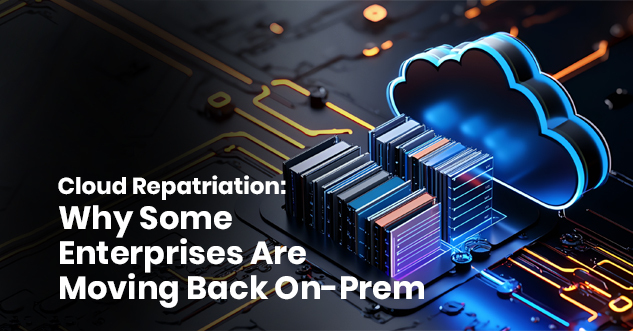
Cloud Repatriation 2026
Published by AgamiSoft | March 2026 | Reading time: ~14 minutes
|
Featured Snippet Cloud repatriation is the deliberate process of moving specific workloads from public cloud environments back to private infrastructure, on-premises data centers, or colocation facilities driven by cost optimization at sustained-utilization scale, data sovereignty requirements, latency performance needs, or regulatory compliance obligations that public cloud cannot satisfy at acceptable cost. Cloud repatriation is not a retreat from cloud strategy it is the recognition that some workloads cost less, perform better, or comply more easily when they run on infrastructure you control. |
|
TLDR ; Cloud repatriation moving selected workloads from public cloud back to on-premises or private infrastructure is accelerating among enterprises that ran the full total cost of ownership calculation on their highest-utilization, most predictable workloads and found that cloud's consumption economics no longer win at steady-state scale. Some organizations are repatriating selected workloads from public cloud environments to optimize costs, improve performance, or meet regulatory requirements not as a rejection of cloud, but as a portfolio rebalancing that assigns workloads to the infrastructure where they genuinely belong based on actual utilization, compliance, and performance requirements. |
Why Cloud Repatriation Has Become a Board-Level Conversation in 2026
The cloud was sold to most enterprises on two premises: infinite scalability and lower cost. For the right workloads, both premises hold. For a specific category of workload high-utilization, predictable, compliance-sensitive, or performance-critical the premises frequently do not hold at the scale enterprises are running in 2026, and the organizations that built their entire infrastructure strategy on universal cloud adoption are discovering the cost in their cloud bills.
Three structural forces have pushed cloud repatriation from a niche conversation to a mainstream strategic option in 2026:
Cloud bills have grown to a scale where CFOs are asking hard questions. The average enterprise now spends $13.7 million annually on cloud infrastructure (Flexera, 2025), and a meaningful portion of that spend is on workloads that have run at consistent utilization for 3–5 years with no meaningful elasticity benefit over that period. A database cluster that runs at 80% utilization 24 hours a day, 365 days a year, has not meaningfully benefited from cloud's pay-for-what-you-use model since it always uses the same amount. Reserved Instance discounts partially address this, but at full commitment levels, the cost difference from equivalent on-premises or colocation infrastructure narrows to the point where CFOs are running the comparison explicitly.
Data sovereignty and regulatory requirements have expanded in ways that make compliance more expensive on public cloud. Saudi Arabia's NDMO data localization requirements, the UAE Federal Data Law, EU GDPR combined with Schrems II, and sector-specific regulations in financial services and healthcare increasingly require organizations to either verify that public cloud satisfies their sovereignty requirements (an expensive compliance exercise) or move to infrastructure where sovereignty is architecturally certain. For organizations where regulatory certainty is worth more than operational flexibility, private infrastructure increasingly provides a cleaner compliance story.
AI and high-performance computing workloads have created GPU economics that favor owned infrastructure at scale. Organizations running large-scale AI training and inference on cloud GPU instances at sustained utilization are discovering that GPU instance costs $2–$8/hour per GPU on demand compound to economics that make owned GPU clusters financially attractive when utilization is consistently above 60–70%. Frontier model training and large-scale inference workloads at leading AI companies have frequently been brought on-premises for exactly this reason.
What Is Cloud Repatriation, Exactly and What Are the Three Models It Takes?
Cloud repatriation is the process of intentionally migrating specific workloads from a public cloud provider's infrastructure AWS, Azure, Google Cloud back to infrastructure the organization controls more directly: on-premises data centers, colocation facilities, or private cloud platforms.
It is not a rejection of cloud computing. It is workload portfolio optimization recognizing that cloud's economic and operational model is not uniformly superior for all workload types at all utilization levels, and acting on that recognition for the specific workloads where the analysis supports it.
Cloud repatriation takes three primary forms:
Model 1 Full on-premises return
Moving workloads to infrastructure physically located in the organization's own data center hardware purchased and operated by the organization. Highest capital expenditure, lowest operating cost at sustained utilization, maximum control. Appropriate for organizations with existing data center facilities, workloads with 5+ year stable demand profiles, and stringent data sovereignty requirements where even colocation doesn't provide sufficient control.
Model 2 Colocation migration
Moving workloads to organization-owned hardware hosted in a third-party data center facility the organization owns and operates the equipment, the facility provides power, cooling, physical security, and connectivity. Lower capital requirement than fully self-operated data centers, lower operating cost than public cloud at sustained utilization, with physical infrastructure independence. The most commonly chosen repatriation model for enterprises without existing data center facilities.
Model 3 Private cloud transition
Moving workloads from public cloud to a private cloud platform typically VMware Cloud Foundation, Nutanix, or OpenStack on organization-owned or colocation hardware. Retains cloud-like orchestration and self-service capability while moving to owned infrastructure economics. The model that preserves the most operational continuity from public cloud while shifting to better economics at scale.
Hybrid cloud the architecture in which an organization intentionally runs workloads across both public cloud and private infrastructure, routing each workload to the environment that best fits its requirements is the end-state for most repatriation programs. Repatriation does not mean abandoning public cloud; it means establishing the private infrastructure tier that enables deliberate workload placement rather than universal cloud dependency.
The Numbers That Are Driving the Cloud Repatriation Conversation
Public Cloud vs On-Premises Economics at Sustained Utilization
|
Workload Type |
Annual Cloud Cost (AWS Reserved 3yr) |
Annual On-Prem Cost (Amortized Hardware + Ops) |
5-Year TCO Comparison |
|
10-node database cluster (r6i.4xlarge equivalent) |
$185,000 |
$95,000–$130,000 |
On-prem: 25–50% lower |
|
100TB object storage (S3 Standard) |
$27,600 |
$8,000–$15,000 (NAS + colocation) |
On-prem: 45–70% lower |
|
GPU cluster (8x A100 equivalent, 70% utilization) |
$1,100,000 |
$450,000–$650,000 (owned hardware + colocation) |
On-prem: 40–60% lower |
|
High-traffic web application (variable load) |
$45,000 |
$80,000–$120,000 |
Cloud: 45–65% lower |
|
Development and test environments |
$30,000 |
$50,000–$80,000 |
Cloud: 40–60% lower |
Sources: Andreessen Horowitz "The Cost of Cloud" analysis 2025; Gartner Hybrid Cloud TCO Report 2025; AWS and Azure pricing calculators at current published rates.
Repatriation Adoption Data
-
Some organizations are repatriating selected workloads from public cloud environments and the trend has quantifiable scale: 37% of enterprises report having moved at least one workload from public cloud to private infrastructure in the past 24 months, up from 14% in 2022 (Flexera State of the Cloud, 2025)
-
The average repatriated workload saves 32% of its annual cloud infrastructure cost after accounting for on-premises hardware amortization, colocation fees, and operational overhead for the specific workload categories where repatriation economics work (Gartner, 2025)
-
Cloud egress fees charges for data transferred out of public cloud are cited as the single most unexpected cost driver triggering repatriation analysis, with enterprises reporting $50,000–$500,000 in annual egress costs for data-intensive workloads (Andreessen Horowitz, 2025)
The Workloads Where Cloud Economics Break Down
The 80/20 rule of cloud repatriation: 80% of the economic case is made by 20% of workloads specifically the workloads with these characteristics:
-
Consistent utilization above 60% with minimal elasticity benefit
-
High data volume with significant egress or cross-region transfer requirements
-
Predictable, long-lived resource requirements that Reserved Instance 3-year commitments don't fully capture
-
Compliance requirements that mandate specific infrastructure controls expensive to implement on public cloud
How to Evaluate and Execute Cloud Repatriation: A 6-Step Framework
Step 1: Conduct a Workload Utilization and Cost Audit Before Any Architecture Decision
Cloud repatriation is a financial and operational decision that must be based on actual workload data, not on industry trends or vendor claims. Before evaluating any specific repatriation, audit your cloud estate for:
-
Utilization profiles: which workloads run at consistently high utilization (above 60%) with minimal variance? These are the candidates where cloud elasticity provides no meaningful value and dedicated infrastructure economics may be better.
-
Actual monthly cost by workload: not your total cloud bill, but the cost attributed to each significant workload cluster identifying which specific services are driving the spend that concerns your CFO
-
Egress and transfer costs: how much of your cloud bill is data transfer egress to the internet, cross-region transfer, data moving to analytics services costs that disappear when the workload runs on infrastructure you own
-
Reserved Instance commitment vs actual usage: which Reserved Instances are running below 80% utilization? Over-committed Reserved Instances are wasted committed spend that indicates a workload is smaller or more variable than the commitment assumed
Step 2: Calculate True Total Cost of Ownership for the Top Repatriation Candidates
The cloud-vs-on-prem TCO comparison must include every cost component on both sides not just the cloud invoice versus the hardware price:
On-premises / colocation TCO components:
-
Hardware capital expenditure (servers, storage, networking), amortized over the expected asset life (typically 5–7 years)
-
Colocation or data center facility costs (if not self-operated): power, cooling, rack space, cross-connects
-
Networking hardware and WAN connectivity costs
-
Additional IT staff time for hardware management, patching, and capacity planning at loaded internal cost
-
Software licensing on owned infrastructure (OS, virtualization, monitoring)
Public cloud TCO components:
-
Reserved Instance or Savings Plan commitment at the level required to run the workload sustainably
-
Data storage at the volume the workload actually uses
-
Egress and data transfer fees at actual measured volume
-
Cloud management tooling (cost management platforms, monitoring)
-
Shared IT staff time for cloud operations at loaded internal cost
The breakeven point where on-premises TCO equals cloud TCO occurs at a different utilization level for every workload type. For most compute-heavy workloads, the crossover is at 60–70% consistent utilization. For storage-heavy workloads with high egress, the crossover occurs at much lower utilization because egress fees dominate.
Step 3: Assess Compliance and Data Sovereignty Requirements for Each Candidate Workload
Some workloads should be repatriated primarily for compliance reasons, not cost and the compliance-driven analysis differs from the cost-driven analysis:
-
Identify which data categories the workload processes regulated customer data, health records, financial transaction data, classified government data
-
Map those data categories against applicable data sovereignty requirements (GDPR, NDMO, UAE Federal Data Law, HIPAA, ITAR) to determine whether public cloud's compliance story satisfies the requirement or requires documented supplementary measures
-
Assess whether the compliance overhead additional controls, audits, contractual frameworks required to run the workload on public cloud compliantly exceeds the cost of running it on controlled private infrastructure where compliance is architecturally simpler
-
For workloads where regulatory certainty matters more than cost optimization, private infrastructure frequently provides a cleaner audit narrative the regulator's question "who can access this data and under what jurisdiction" is simpler to answer for infrastructure you physically control
Step 4: Design Your Target Private Infrastructure Architecture Before Committing Hardware
The infrastructure architecture decisions made at repatriation design time determine whether the repatriated environment delivers its expected economics:
-
Compute platform: bare metal servers (maximum performance, minimum overhead) versus VMware Cloud Foundation or Nutanix (cloud-like orchestration on owned hardware) versus Kubernetes on bare metal (cloud-native workloads on private infrastructure). Match the platform to the workload's operational requirements, not to the team's tooling preference.
-
Storage architecture: SAN/NAS for database and file workloads, object storage (MinIO, Ceph) for workloads currently on S3-compatible storage, NVMe-oF for latency-sensitive databases that cannot tolerate SAN overhead
-
Networking: determine your connectivity requirements on-premises to public cloud connectivity for the hybrid workloads that remain on cloud, internet connectivity for customer-facing services, inter-datacenter connectivity for redundancy
-
Operations model: establish the staffing and tooling for the additional operational scope the private infrastructure adds specifically what your team will manage differently on-prem versus cloud, and whether that management overhead is actually captured in your TCO model
Step 5: Execute Migration Using a Parallel Running Model
Repatriation migrations carry the same risk profile as any major infrastructure migration and require the same parallel running methodology that minimizes cutover risk:
-
Stand up the private infrastructure environment and validate it against the target performance and reliability requirements before any production traffic moves
-
Migrate workloads in phases starting with the workloads with the highest repatriation economic case and the lowest cutover complexity (typically databases and batch workloads before customer-facing services)
-
Run the private infrastructure and cloud versions in parallel during the transition, comparing outputs and performance metrics before cutting over traffic
-
Maintain cloud infrastructure for 30–60 days after primary cutover for rollback capability decommissioning cloud resources only after stability at full production load is confirmed
Step 6: Implement Ongoing Workload Placement Governance to Prevent Drift
The most common outcome of unmanaged hybrid cloud architecture is gradual drift back toward universal cloud dependency as new workloads are deployed to cloud by default. Implement governance that maintains deliberate workload placement:
-
Establish a workload placement policy that defines which workload types belong in cloud versus private infrastructure, based on the utilization, compliance, and performance criteria established during the repatriation analysis
-
Require a workload placement review for every new significant workload before deployment preventing cloud-default behavior that bypasses the placement decision entirely
-
Conduct annual TCO reviews of all workloads above a cost threshold, reassessing whether the current placement remains optimal as utilization patterns, cloud pricing, and hardware economics evolve
Which Tools and Approaches Best Support Cloud Repatriation Programs in 2026?
For cloud cost analysis and repatriation candidate identification:
CloudZero and Apptio Cloudability provide workload-level cost attribution that identifies which specific services are driving your cloud bill the prerequisite for repatriation economic analysis. AWS Cost Explorer and Azure Cost Management provide native cost visibility at the service level but require additional tooling to attribute costs at the workload business-dimension level.
For TCO modeling:
Gartner's Infrastructure Optimization Model and custom spreadsheet models built on published cloud pricing and hardware vendor quotes are the standard approaches no purpose-built SaaS TCO tool fully replaces the custom analysis required for each organization's specific hardware, staffing, and colocation cost structure.
For private cloud infrastructure:
VMware Cloud Foundation provides the most mature enterprise private cloud platform vSphere, vSAN, and NSX in a unified stack that provides cloud-like orchestration on owned hardware. Nutanix Cloud Platform provides comparable capability with particular strength in hyperconverged infrastructure and a stronger multi-cloud management story. OpenStack provides an open-source private cloud platform for organizations with the engineering capability to operate it without commercial support.
For on-premises object storage (S3 replacement):
MinIO provides S3-compatible object storage deployable on-premises at a fraction of S3's per-GB cost for the organizations with the storage volume that justifies the infrastructure investment. NetApp StorageGRID provides comparable enterprise-grade S3-compatible object storage with stronger compliance and governance capability.
For colocation provider selection:
Equinix, Digital Realty, and CyrusOne provide Tier 3 and Tier 4 colocation facilities in major markets globally the facilities that provide power, cooling, physical security, and connectivity for organization-owned hardware. For GCC-based repatriation, Khazna Data Centers (UAE) and DataVolt (Saudi Arabia) provide sovereign colocation in GCC jurisdictions.
For hybrid cloud management:
HashiCorp Terraform provides infrastructure-as-code management across both cloud and on-premises infrastructure. VMware Aria (formerly vRealize) provides multi-cloud management for VMware-based hybrid environments. Morpheus Data provides cloud management platform capability that spans public cloud and on-premises infrastructure in a unified policy and governance layer.
Explore our Hybrid Cloud Solutions and Cloud Cost Optimization capabilities for enterprises evaluating cloud repatriation options and hybrid cloud architecture design.
What Goes Wrong With Cloud Repatriation Programs and How to Prevent Each Failure
Failure 1: Repatriating Workloads That Actually Benefit From Cloud Elasticity
The most consistent cloud repatriation failure is applying the repatriation analysis to workloads that genuinely benefit from cloud's elasticity customer-facing web applications with variable traffic, development and test environments, disaster recovery, and machine learning training jobs that run intermittently. These workloads have legitimate cloud economics because their consumption is genuinely variable. Repatriating them to private infrastructure forces you to provision for peak capacity that sits idle during normal operations the exact problem cloud solved. Repatriation economics work only for the workloads with consistently high, predictable utilization. Applying the model to variable workloads produces worse economics than cloud, not better.
Failure 2: Underestimating the Operational Overhead Cost in the TCO Model
Organizations that model TCO as hardware amortization plus colocation fees excluding the additional IT operations staffing cost that private infrastructure requires consistently discover that their actual on-premises cost exceeds their model by 20–40%. A private infrastructure environment requires additional capacity planning, hardware procurement cycles, firmware management, physical layer troubleshooting, and incident response that cloud abstracts away. The staff time those functions consume carries a loaded salary cost that must be included in the TCO comparison, or the model understates private infrastructure's true cost.
Failure 3: Repatriating Without Designing the Connectivity Architecture First
Repatriated workloads frequently depend on data, services, or APIs that remain in public cloud either workloads that appropriately stay in cloud or SaaS services that don't have on-premises equivalents. The network connectivity between private infrastructure and public cloud Direct Connect (AWS), ExpressRoute (Azure), or Cloud Interconnect (GCP) carries a monthly cost and latency profile that must be modeled before repatriation, not discovered afterward when the repatriated workload's performance degrades because its cloud dependencies are now accessed over a WAN rather than within a cloud VPC.
Failure 4: Treating Repatriation as Irreversible
Organizations that decommission cloud infrastructure immediately upon on-premises cutover, treating repatriation as a one-way door, eliminate the optionality that makes hybrid cloud strategy valuable. Cloud's variable cost model means that running a standby cloud environment for DR, burst capacity, or rollback has a defined, calculable cost and that cost is frequently worth paying to maintain the flexibility to route workloads back to cloud if private infrastructure proves inadequate or if the workload's utilization pattern changes to favor cloud economics. Design repatriation as a workload placement decision that can be reversed, not a permanent infrastructure exit.
Frequently Asked Questions
What Is Cloud Repatriation?
Cloud repatriation is the deliberate process of moving specific workloads from public cloud infrastructure AWS, Azure, or Google Cloud back to on-premises data centers, colocation facilities, or private cloud platforms. It is a workload portfolio optimization decision driven by one or more of three rationales: cost when a workload's consistent high utilization makes dedicated infrastructure cheaper than cloud consumption pricing; compliance when data sovereignty requirements are more easily satisfied on controlled private infrastructure; or performance when network latency, egress costs, or hardware-specific requirements make private infrastructure a better technical fit. Cloud repatriation does not mean abandoning cloud strategy; it means establishing a hybrid architecture that places each workload in the infrastructure environment where it genuinely belongs.
Why Are Businesses Moving Workloads Back On-Premises?
Businesses are moving specific workloads back on-premises primarily for cost reasons at sustained utilization scale when a workload runs at consistently high utilization with minimal elasticity benefit, cloud's consumption pricing model produces higher costs than equivalent dedicated infrastructure amortized over 5–7 years. Egress fees charges for data transferred out of public cloud are the most frequently cited trigger for repatriation analysis, with data-intensive workloads accumulating $50,000–$500,000 in annual egress costs that disappear on owned infrastructure. Secondary drivers include data sovereignty regulations that mandate specific infrastructure controls, and GPU economics for AI workloads where sustained high utilization makes owned GPU clusters financially attractive compared to cloud GPU instance costs at scale.
Which Workloads Should Be Repatriated?
The workloads best suited for repatriation are those with consistently high utilization (above 60%), predictable and stable resource requirements over a 3–5 year horizon, significant data egress or inter-service transfer costs, and data sovereignty or compliance requirements that are more simply satisfied on controlled infrastructure. Database clusters with predictable load profiles, high-volume storage with significant egress, GPU infrastructure for AI workloads at sustained utilization, and compliance-sensitive data processing are the workload categories where repatriation economics are most consistently favorable. Workloads that should remain in cloud include customer-facing applications with variable traffic, development and test environments, disaster recovery, and any workload that genuinely benefits from cloud's elasticity provisioning for their peak load on private infrastructure recreates the exact overprovisioning problem cloud was designed to solve.
Run the Workload Audit First. Model Total Cost of Ownership Honestly. Repatriate the Workloads That Win the Calculation Not All of Them.
Cloud repatriation delivers its economic and compliance benefits when it is applied as a workload-level analysis rather than an infrastructure philosophy identifying the specific workloads where private infrastructure economics win the total cost of ownership comparison, and leaving the workloads where cloud genuinely wins where they are.
The CIOs and enterprise architects achieving the best outcomes from cloud repatriation in 2026 share one analytical discipline: they ran the full TCO model hardware amortization, colocation, networking, and loaded staff time against actual workload utilization data before making any infrastructure commitment, rather than projecting from industry benchmarks that may not reflect their specific workload profile. That data-driven analysis produced repatriation decisions that consistently delivered the projected savings, because the model was built on what the workload actually costs, not on what the workload theoretically should cost.
Commission a workload utilization and cost audit for your top 10 cloud cost contributors this quarter. Build the full TCO model for the two or three workloads that appear most clearly suited for repatriation based on their utilization profiles and egress costs. Design your connectivity architecture between private and cloud infrastructure before committing to hardware procurement. And maintain your cloud infrastructure for 60 days after any repatriation cutover before decommissioning preserving rollback optionality until the private infrastructure's performance and reliability under full production load is confirmed.
To design a hybrid cloud architecture that places each workload in the infrastructure environment where it genuinely belongs whether that's public cloud, colocation, or on-premises explore our Hybrid Cloud Solutions and Cloud Cost Optimization capabilities structured for CIOs and enterprise architects who need infrastructure strategy delivered as a data-driven portfolio decision, not a vendor-led migration.
United States
Salesforce Tower, 415 Mission Street,
San Francisco, CA 94105
Canada
206-15268 100 Avenue,Surrey,
British Columbia, V3R 7V1, Canada
Bangladesh
Sharif Complex (11th floor),
31/1 Purana Paltan, Dhaka - 1000